
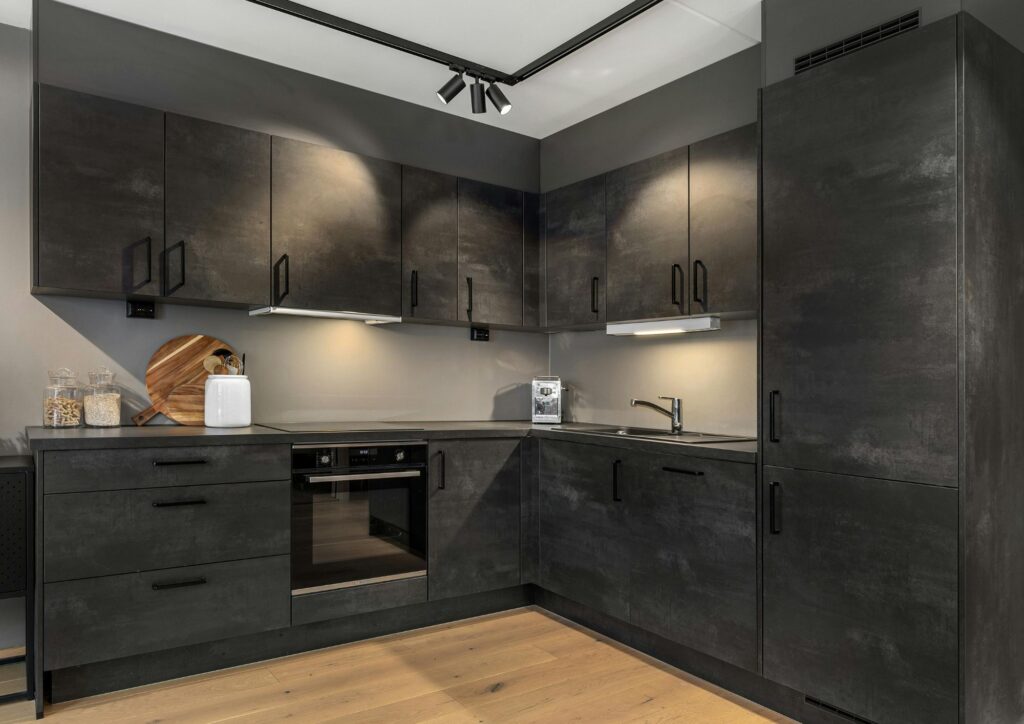
Building a new home gives you the opportunity to design your kitchen exactly the way you want it. From benchtops and cabinetry to lighting and storage, every detail can be planned before construction begins.
One decision that is becoming increasingly popular in modern Australian homes is whether to choose integrated appliances.
Integrated fridges, dishwashers, rangehoods and other appliances can create a beautifully streamlined kitchen, with appliances concealed behind cabinetry or incorporated seamlessly into the overall design. But while the finished result can look impressive, there are some practical considerations that homeowners should think about before committing.
What happens when an integrated appliance needs servicing? Is there enough ventilation? Can it be easily removed? And what happens in ten years when the original model needs replacing?
Before designing your new kitchen around integrated appliances, it is worth considering both the advantages and disadvantages.
What Are Integrated Appliances?
Integrated appliances are designed to fit within your kitchen cabinetry rather than standing out as separate appliances.
For example, an integrated dishwasher may have a cabinet panel attached to the front so that, when closed, it looks like another kitchen cupboard. An integrated refrigerator can be installed in much the same way, creating a continuous cabinetry finish across the kitchen.
Common integrated appliances include:
- Dishwashers
- Refrigerators and freezers
- Rangehoods
- Microwaves
- Coffee machines
- Ovens
- Wine refrigerators
Some appliances are fully integrated and almost completely hidden, while others are built into cabinetry but remain visible.
The Biggest Benefit: A Clean, Modern Kitchen
The obvious attraction of integrated appliances is appearance.
Instead of having a stainless steel refrigerator, dishwasher and other appliances interrupting your cabinetry, the kitchen can have a consistent finish from one end to the other.
This works particularly well in open-plan homes where the kitchen is visible from the dining and living areas.
Integrated appliances can also be useful when designing minimalist kitchens where homeowners want appliances, handles and other visual elements kept to a minimum.
However, appearance shouldn’t be the only consideration.
Integrated Appliances Can Make Servicing More Complicated
One of the most important considerations is something homeowners may not think about when designing their new kitchen: how will the appliance be accessed when it needs servicing?
Even premium appliances can eventually develop faults.
Dishwashers can experience drainage problems, heating faults or pump failures. Refrigerators can develop cooling problems, electrical faults or issues with fans and thermostats.
A freestanding appliance can usually be accessed relatively easily. Integrated appliances may be more complicated.
Cabinet panels, kickboards or surrounding cabinetry may need to be removed before a technician can properly access the appliance.
When planning a new kitchen, make sure appliances are installed with future servicing in mind.
Don’t Forget About Ventilation
Correct ventilation is particularly important for appliances that generate heat or rely on airflow for cooling.
An appliance installed too tightly within cabinetry may not receive the airflow recommended by the manufacturer.
This can potentially cause the appliance to operate inefficiently or place additional strain on components.
Always follow the manufacturer’s installation specifications regarding ventilation gaps, clearances and airflow.
Your cabinetmaker should also have the exact appliance specifications before cabinetry is manufactured.
Consider Where Power, Water and Drainage Connections Are Located
Another important consideration is access to services.
Dishwashers require water, drainage and electricity, while refrigerators may require water connections if they have automatic ice makers or chilled water dispensers.
These connections should ideally remain reasonably accessible.
Poorly positioned plumbing or electrical connections can make future appliance servicing unnecessarily difficult.
Thinking about access during the construction stage can potentially save considerable inconvenience later.
What Happens When the Appliance Needs Replacing?
This is arguably one of the biggest disadvantages of integrated appliances.
Your kitchen cabinetry might last 15, 20 or even 25 years.
Your appliances may not.
If an integrated appliance eventually reaches the end of its serviceable life, finding another appliance with exactly the same dimensions can sometimes be challenging.
Appliance designs and specifications change over time.
A replacement dishwasher may be slightly different in height. A new refrigerator may require different ventilation clearances. A replacement model might not accept the existing cabinetry panel.
This doesn’t mean you should avoid integrated appliances, but it does mean replacement should be considered during the original kitchen design.
Choosing common appliance dimensions and avoiding unnecessarily restrictive cabinetry can provide more flexibility later.
Integrated Appliances Can Be More Expensive
Integrated appliances are often more expensive than comparable freestanding models.
There may also be additional costs associated with cabinetry, installation and custom door panels.
If something eventually needs replacing, those additional installation considerations may also increase the overall replacement cost.
For homeowners working within a strict building budget, it is worth comparing the complete installed cost rather than simply comparing appliance prices.
Are Integrated Dishwashers a Good Idea?
Integrated dishwashers can be an excellent choice because they provide the clean appearance many homeowners want without requiring a significant amount of cabinetry space.
However, installation is important.
The dishwasher needs appropriate access to drainage, water and electricity, while the cabinetry and kickboard should allow the appliance to be removed when servicing is required.
It is also worth keeping the model and installation documentation somewhere safe. This information can be extremely useful several years later if the dishwasher requires repairs.
What About Integrated Refrigerators?
Integrated refrigerators require a little more consideration.
Refrigerators need effective ventilation to remove heat generated during the refrigeration process.
The cabinetry therefore needs to be designed around the manufacturer’s ventilation requirements rather than simply around the physical dimensions of the refrigerator.
Integrated refrigerators can also be expensive to replace, making it particularly important to choose the appliance carefully.
Should You Integrate Every Appliance?
Not necessarily.
A combination of integrated and conventional appliances can sometimes provide the best balance between appearance, practicality and future flexibility.
You might choose an integrated dishwasher and rangehood while using a freestanding refrigerator that can easily be replaced in the future.
Think about which appliances contribute most to the appearance of your kitchen and which appliances you would prefer to keep easily accessible.
Plan for Appliance Servicing Before the Kitchen Is Built
When building a new home, most people understandably focus on how their kitchen will look on the day they move in.
It is equally important to think about how it will function five or ten years later.
Before finalising cabinetry around an appliance, consider:
Can the appliance be removed without damaging the cabinetry?
Can a technician access important components?
Are electrical, plumbing and drainage connections accessible?
Does the appliance have the ventilation recommended by the manufacturer?
Could another appliance reasonably fit into this space in the future?
A little forward planning can make appliance repairs and replacements considerably easier later.
So, Are Integrated Appliances Worth It?
For many homeowners, absolutely.
Integrated appliances can create an attractive, streamlined kitchen and are particularly suited to contemporary and open-plan homes.
The potential disadvantages are mainly practical. They can cost more initially, servicing access may be more complicated, and replacing an appliance years later can sometimes present challenges if cabinetry has been designed around one specific model.
The key is to plan beyond the initial installation.
If you’re building or renovating, consider not only how your appliances will look today but also how they can be serviced, repaired and eventually replaced.
A well-designed kitchen should make all three possible without having to dismantle half the cabinetry.
Need an Appliance Repaired?
Blackburn Appliance Repairs provides professional Fisher & Paykel appliance repairs across Brisbane’s Bayside and surrounding areas.
Whether you have a dishwasher that won’t drain, a refrigerator that isn’t cooling correctly or another household appliance that has developed a fault, Blackburn Appliance Repairs can assess the problem to determine whether repair or replacement is the most practical option.
Frequently Asked Questions
Are integrated appliances harder to repair?
Not necessarily, but accessing them can sometimes take longer because cabinetry panels, kickboards or other components may need to be removed before servicing.
Do integrated refrigerators need ventilation?
Yes. Refrigerators need appropriate airflow to operate correctly. Integrated models should always be installed according to the manufacturer’s ventilation and clearance requirements.
Can an integrated dishwasher be replaced with another brand?
Potentially, provided the replacement appliance has suitable dimensions and installation requirements. Always check measurements and cabinetry compatibility before purchasing a replacement.
How long should kitchen appliances last?
Appliance lifespan varies considerably depending on the appliance, brand, usage, installation and maintenance. This is why it is sensible to design cabinetry so appliances can be repaired or replaced in the future.
Should I repair an integrated appliance or replace it?
It depends on the age of the appliance, the fault, repair cost, availability of parts and the cost and complexity of installing a replacement. An appliance technician can assess the fault and help determine whether repair is practical.